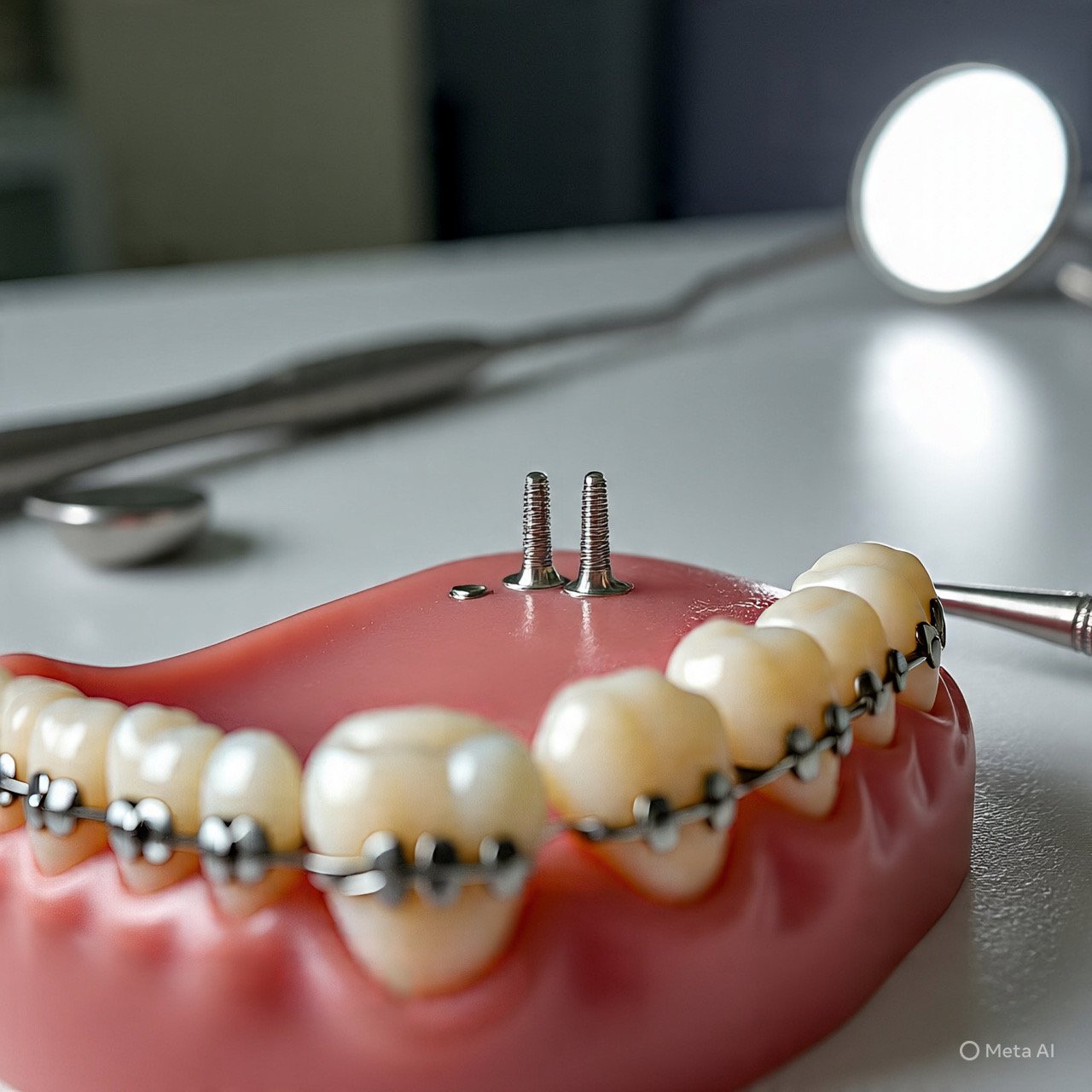
If your orthodontist has mentioned “attachments” before starting clear aligner treatment, you may have felt a flicker of surprise. You signed up for an invisible way to straighten your teeth, and now there are little bumps involved? Don’t worry. Attachments are one of the most common and most useful parts of modern aligner treatment, and understanding them will make your whole experience smoother.
This guide explains exactly what aligner attachments are, the different types you might get, how they’re placed and removed, and honest answers to the questions patients actually ask.
What Are Aligner Attachments?
Aligner attachments are tiny, tooth-colored bumps made of dental composite resin — the same material dentists use for white fillings — that are bonded to the surface of specific teeth during clear aligner treatment. They’re sometimes called buttons, engagers, bumps, or by brand-specific names like Invisalign’s “SmartForce attachments.”
Think of them as small handles. A clear aligner is a smooth plastic tray, and smooth plastic struggles to get a firm grip on a smooth, rounded tooth. Attachments give the tray something to push against, so it can deliver force in a precise, controlled direction. Without them, certain tooth movements would be slow, unpredictable, or simply impossible with aligners alone.
They are bonded on at the start of (or partway through) treatment, stay on for as long as they’re needed, and are polished off completely at the end. They are not permanent, and they don’t damage your enamel.
Why Are Aligner Attachments Necessary?
Aligners are excellent at simple jobs like closing small gaps or correcting mild crowding by gently tipping teeth. The trouble starts with more demanding movements. Here’s where attachments earn their place:
– Rotating teeth.Round-ish teeth like canines and premolars are slippery for an aligner to turn. An attachment gives the tray the leverage to twist the tooth into position.
– Extruding or intruding teeth. Moving a tooth up or down along its long axis (out of or into the gum) needs very specific forces that flat plastic can’t generate on its own.
– Bodily movement (translation). Shifting an entire tooth — crown and root together — instead of just tipping the crown requires extra control.
– Closing larger spaces predictably.Attachments help direct force so teeth move together cleanly rather than just tilting toward each other.
– Improving aligner “tracking.” A well-placed attachment helps the tray seat fully and stay snug, so the aligner actually delivers the movement it was designed for.
Not every patient needs them. Very mild cases can sometimes be finished without a single attachment. But for anything beyond minor alignment, they’re usually part of a well-planned treatment.
The Main Types of Aligner Attachments
This is where most online explanations stop short. “Attachments” isn’t one thing — there are a few different categories, and knowing the difference helps you understand your own treatment plan.
Conventional (Passive) Attachments
These are simple, standardized shapes — small rectangles, ovals, ellipses, or beveled blocks — that the orthodontist places to improve the aligner’s grip and retention. They’re called “passive” because their main job is to help the tray hold on and stay seated, rather than to actively drive a specific movement. They’ve been used for years and remain reliable workhorses.
Optimized (Active) Attachments
Used by systems like Invisalign, optimized attachments are designed by the treatment-planning software individually for each tooth. The software calculates the exact size, shape, angle, and position needed to produce a particular movement — say, rotating a specific canine or extruding a lateral incisor. The aligner is then manufactured with a perfectly matched pocket that fits over it. These are more customized than conventional attachments and are aimed at making tricky movements more predictable.
Buttons
Buttons are a close cousin, but they do a different job. A button is a small composite or metal anchor bonded to a tooth that acts as a hook for **elastics** (tiny rubber bands). The elastics stretch between teeth or between the upper and lower arch to correct bite problems like overbites, underbites, and crossbites. So if your plan involves rubber bands, you’ll likely get buttons rather than (or in addition to) standard attachments. Buttons can be slightly more noticeable than tooth-colored attachments.
A quick way to remember the difference
Attachments help the aligner grip and move teeth. Buttons give elastics something to pull on. Both are small, both are temporary, and both are part of turning a simple tray into a system capable of rivaling traditional braces.
How Are Aligner Attachments Placed?
The appointment is quick, painless, and requires no drilling or numbing. The process looks like this:
1. Planning. Long before this visit, your orthodontist maps out exactly which teeth need attachments and what shape each one should be, using 3D digital software.
1. Tooth prep. The relevant teeth are cleaned and dried, and a mild etching gel is applied for a few seconds to help the resin bond, then rinsed off.
1. Template placement. A clear “template” tray — which looks like an aligner but has small wells where the attachments go — is loaded with composite resin and seated over your teeth.
1. Curing. A bright dental light hardens the resin in seconds.
1. Finishing. The template is removed, any excess material is cleaned away, and your first set of working aligners is checked for a snug fit over the new attachments.
Placing attachments on several teeth usually takes around 30 minutes total.
What Do Aligner Attachments Feel Like? (The Honest Version)
Most guides gloss over this, so here’s the straight talk. For the first few days to a couple of weeks, attachments can feel strange:
– They rub. When your aligners are *out* (eating, brushing), the small raised bumps can feel rough against your lip or cheek. This almost always settles as your soft tissues adjust.
– Aligners feel tighter.Trays grip more firmly over attachments, so taking them in and out takes a little more effort at first. Use your fingertips, not your teeth, to seat them.
– Then you forget they exist.The overwhelming majority of patients stop noticing attachments within a couple of weeks. When the aligners are in, the smooth plastic covers the bumps entirely.
The placement itself does not hurt. Any mild tenderness afterward is usually just the normal pressure of a new aligner set doing its job.
Are Aligner Attachments Noticeable?
Far less than people fear. Attachments are color-matched to your enamel and polished smooth, so once your aligners are seated they’re very hard to spot. With the trays out, someone standing close might notice faint bumps on your front teeth — attachments on molars are essentially invisible. Either way, they’re dramatically more discreet than metal brackets and wires.
One important caveat: don’t whiten your teeth during treatment.Composite attachments don’t respond to whitening agents the way enamel does, so you can end up with mismatched shades. Save whitening for after the attachments come off.
Caring for Your Teeth and Attachments
Because attachments create small raised surfaces, they can trap plaque if you’re not attentive. A few habits keep everything healthy:
– Brush after meals and pay extra attention to the area around each attachment.
– Floss daily to clear debris that collects at the base of the bumps.
– Use chewies (small foam cylinders you bite on) to help aligners seat fully over the attachments.
– Avoid staining traps. Coffee, tea, red wine, and curry can discolor composite over time. Rinse or brush after, and never drink anything but water while wearing your aligners.
– Don’t bite your trays into place — that flexing can pop an attachment loose.
What If an Aligner Attachments Falls Off?
It happens, and it’s not an emergency. A bonding failure can come from chewing hard foods, biting aligners into place, or simply a less-than-perfect bond. If one comes off:
– Don’t panic, and don’t try to glue it back yourself.
– Call your orthodontist and let them know which tooth is affected.
– Keep wearing your aligners unless told otherwise.
Replacing an attachment is a quick re-bond at your next visit. Leaving one off for a long stretch, however, can slow your progress, since that tooth loses some of its guided movement — so don’t sit on it for weeks.
How Are Aligner Attachments Removed?
When your treatment finishes, removal is fast and completely painless. Your orthodontist gently polishes the composite off with a dental instrument and smooths the enamel underneath. There’s no drilling into the tooth and no lasting mark — most patients are surprised they can’t even tell where the attachments used to be. From there, you move into the retainer phase to hold your new smile in place.
Frequently Asked Questions
Do I really have to get attachments?
Technically you can decline, but it’s rarely advisable. Attachments are planned to produce movements your aligners can’t achieve alone, so refusing them can compromise your result or extend your treatment. If you’re worried about appearance or lifestyle, raise it with your orthodontist — they can tell you how realistic a no-attachment plan is for your specific case.
How many attachments will I need?
It depends entirely on the complexity of your case. Some people get just one or two; others need them on most teeth. More attachments isn’t a sign your teeth are “worse” — it just reflects the movements being planned.
Do attachments stay on the whole time?
Usually yes, but not always. Some are added, removed, or adjusted at different stages as your teeth move. Your orthodontist manages this as treatment progresses.
Can I eat normally with attachments?
Yes. You remove your aligners to eat anyway, and the attachments stay put. Just be a little cautious with very hard or sticky foods that could knock one loose.
Will attachments damage my enamel?
No. When placed and removed properly, they don’t harm your teeth. The only real risk is from poor cleaning — plaque buildup around an attachment can cause decay — which good hygiene prevents.
The Bottom Line
Aligner attachments are small, tooth-colored, and easy to overlook, but they do a lot of heavy lifting. They give your aligners the grip and leverage to perform complex movements — rotations, vertical shifts, bodily movement, and bite corrections — that smooth trays simply can’t manage on their own. They’re temporary, discreet, and removed without a trace at the end of treatment.
So if your orthodontist recommends attachments, take it as a good sign: it means your treatment is being planned carefully to give you the best, most predictable result. They’re not a complication — they’re the quiet engine that makes clear aligner treatment work.
more at:https://www.clearpathortho.com/
This is general information, not a substitute for advice from your treating clinician”) given the YMYL/health nature